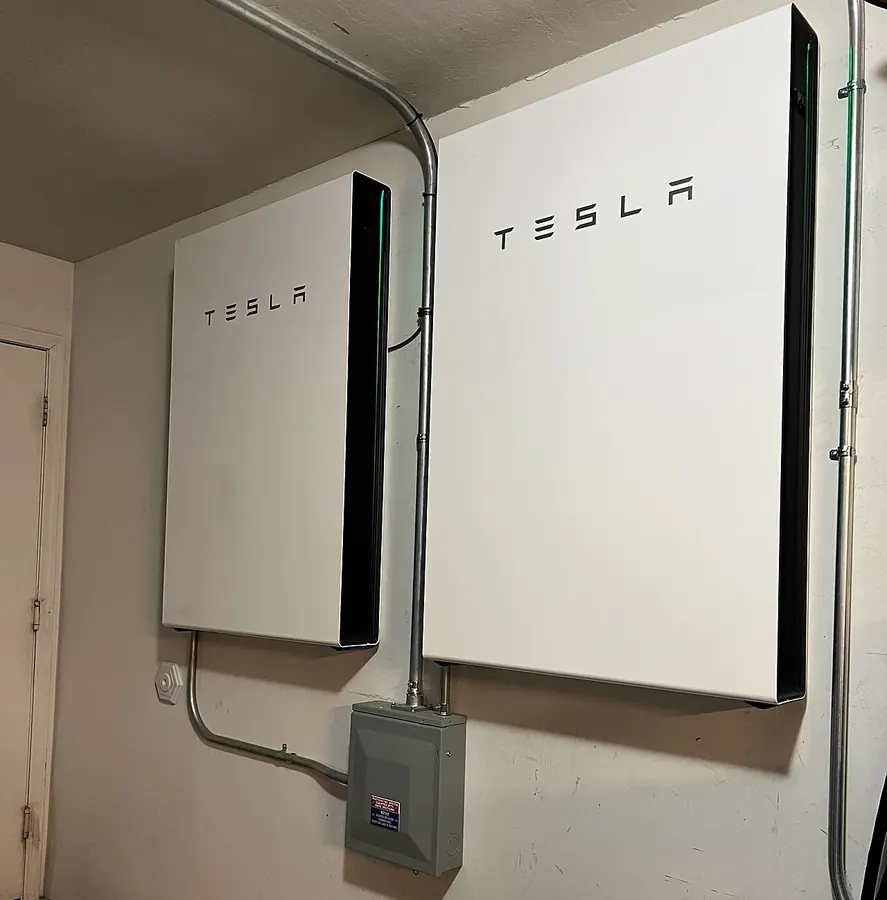
Rooftop solar panels and an LFP battery turn a home into its own power plant. By day the home runs on the sun and charges the battery, in the evening it uses the reserve, and when the grid goes down the lights, fridge and air conditioning keep working. For a family that means quiet instead of a generator and a smaller electricity bill; for a hotel or store — work without interruptions.
How it works
A panel is assembled from silicon cells. Each has two layers of silicon with different impurities, and at their boundary sits a built-in electric field. A photon of sunlight knocks out an electron, the field carries it one way and the “hole” the other, and direct current flows through the wires. The more light, the stronger the current, so the tilt angle, the shade of a nearby tree and clean glass all matter. TOPCon cells lose fewer electrons on the way to the contacts — hence their high efficiency.
The home runs on alternating current, while the panels and the battery run on direct current. The bridge between them is a hybrid inverter. It finds the point at which the panel delivers maximum power and constantly decides where to send energy: first to the home’s outlets, then to the battery, the surplus to the grid. If the grid goes down, the inverter disconnects the home from it and switches it to the battery in a fraction of a second: the lights usually do not even flicker, and electricians on the line work safely.
An LFP battery is lithium iron phosphate. When charging, lithium ions leave the iron phosphate cathode for the graphite anode; when discharging they return, and meanwhile electrons run through the home’s wiring and spin the air conditioner’s compressor. The phosphate cathode holds on to its oxygen firmly, so these batteries tolerate overheating more calmly and last thousands of cycles. The BMS electronics watch every cell — voltage, current, temperature — and disconnect the battery before it comes to harm.
Where it already works
- Villas and homes in Vietnam: since 26 Jun 2026, rooftop surplus can be sold — up to 50% of output.
- Dachas and country houses in Russia without a reliable grid — instead of a noisy generator.
- Southern Russia and resorts, where there is plenty of sun and the grid is overloaded.
- Hotels and stores: lights and air conditioning without interruptions, a smaller energy bill.
- Backup for the fridge, pump, boiler and communications during a grid outage.
What to consider
- First work out consumption hour by hour: battery capacity is sized for the evening and night, not by eye.
- Find out whether selling surplus is allowed and at what price; calculate payback without it too.
- The battery — only a certified LFP with a clear warranty and proper installation.
- Shade, orientation and the roof’s strength matter more than an extra percent of panel efficiency.