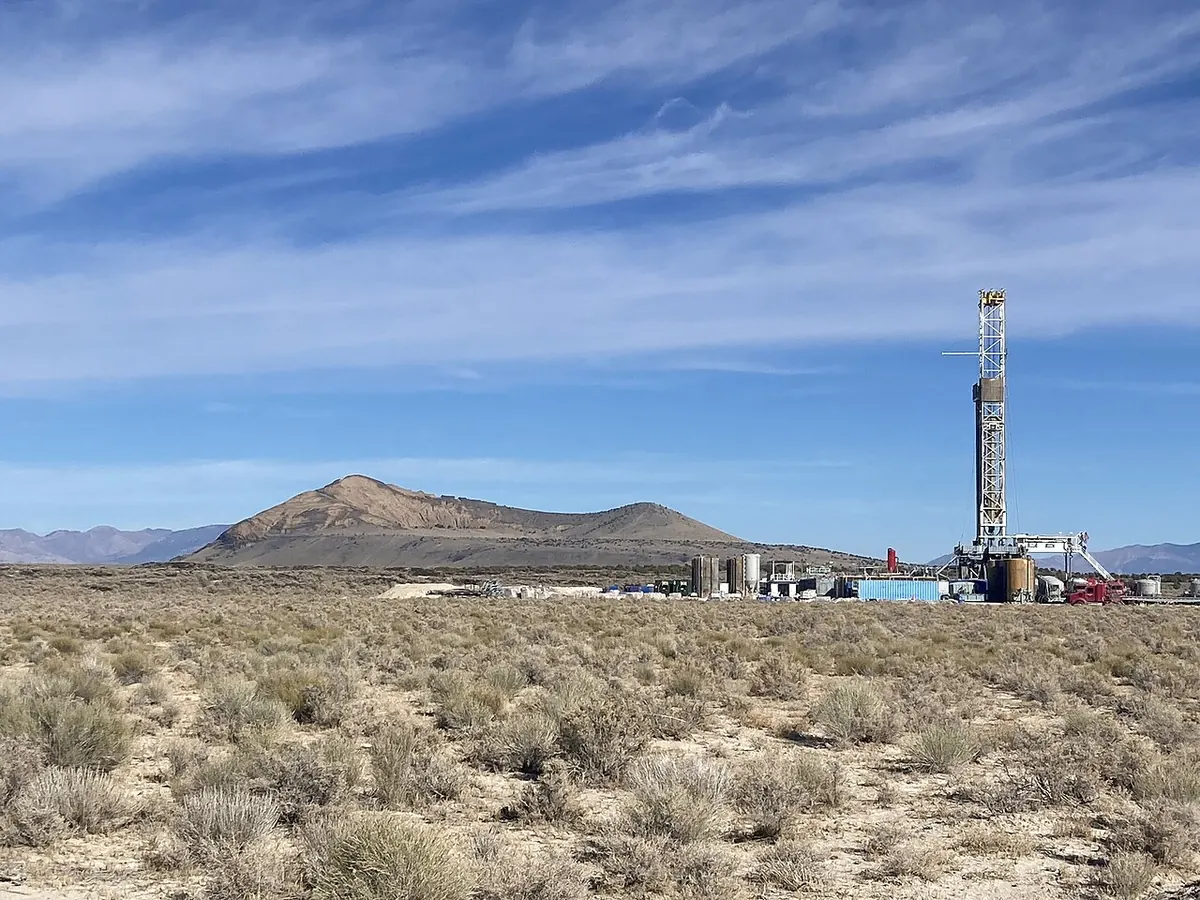
Beneath your feet is a huge furnace: the deeper you go, the hotter the rock. Next-generation geothermal energy reaches this heat where there are no geysers or volcanoes, using drilling technology from oil production. A plant runs around the clock in any weather, with no fuel and a small footprint on the surface. For industry and power grids, this is clean energy without pauses — what sun and wind cannot give without storage.
How it works
The Earth is hot inside: radioactive elements decay in its depths, and heat from the planet’s birth is still stored there. This heat slowly rises to the surface, and with every kilometer down the rock gets hotter. Classic geothermal works where hot water comes close to the surface on its own — near volcanoes and geysers. The new kind goes to the heat itself: it drills deep where the surface is ordinary plain or desert.
Deep hot rock is solid, like a granite floor: water has nowhere to flow through it. So engineers borrow a technique from shale oil production: they drill vertically, then turn the well horizontal and use pressure to open a network of thin fractures in the rock. A second well is drilled nearby. Cold water is pumped into the first, seeps through the fractures, heats up from the rock and comes out of the second one hot — the result is an underground heat exchanger.
At the surface the hot water gives up its heat: it turns into steam itself or heats a second fluid with a low boiling point, and the steam spins the generator’s turbine. The cooled water is pumped back down, the loop is closed, and almost no water is lost. The plant does not depend on sun or wind and delivers steady power day and night. Fervo Cape in Utah has been in commercial operation at 33 MW since 30 Sep 2026, with 100 MW planned by January 2027.
Where it already works
- Fervo Cape in Utah: 33 MW in commercial operation since 30 Sep 2026.
- Power grids that need steady power around the clock, not just in the daytime.
- Classic geothermal: electricity and heat where hot water is close — Iceland, Kamchatka.
- Heat for greenhouses, factories and towns near hot ground.
What to consider
- This is large-scale energy, not a purchase: you can work with it through energy companies and projects.
- Drilling is the main cost item, and the depth and temperature of the rock decide the economics.
- Pumping water in can cause weak tremors — they are tracked by a network of sensors.
- For a home, a ground-source heat pump is the closer fit — that is a different, shallow geothermal.