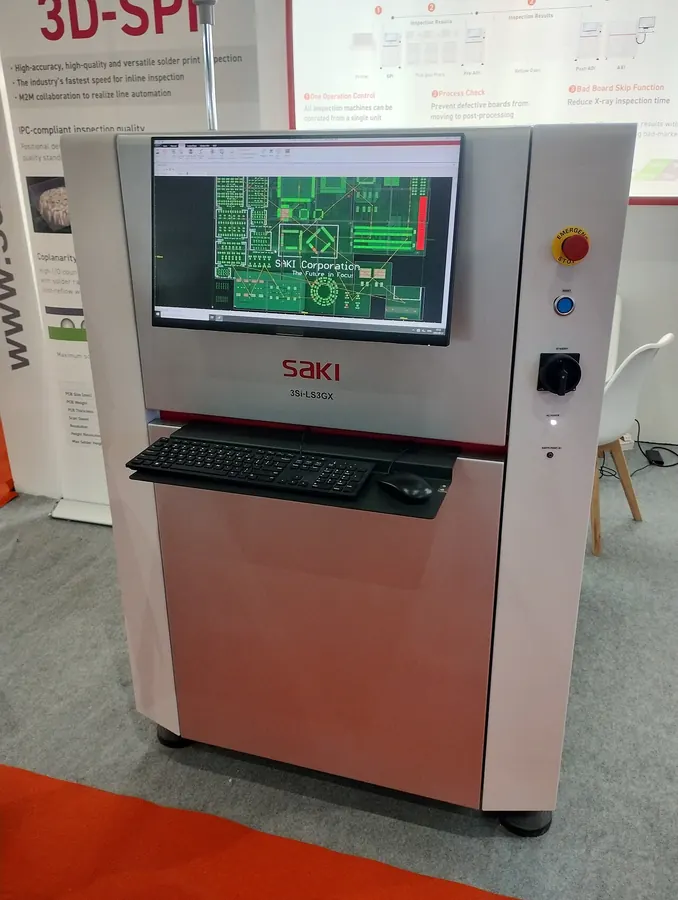
Machine vision on the line is a camera and a neural network that look at every item on the conveyor. They spot scratches, chips, underfill and skewed labels, give the command to take a defective item off the belt and log it in a report with a photo. Inspection runs without sampling and without fatigue: the last bottle of the shift gets the same attention as the first.
How it works
Half of success is the light. For glossy caps, a dome of diffuse light is used to avoid glare. For scratches — light from the side at a low angle: every fine mark casts a shadow. For liquid level — backlighting, so the bottle is seen against the light. The camera is industrial, with a global shutter: it captures the whole frame at once, so a part on a fast belt does not blur.
A sensor on the belt detects the item and gives the command at the right instant: flash, frame. The image goes to a server running the model, and within a fraction of a second it decides whether the item is good or defective and where exactly the defect is. The model is trained on images of good and bad items labeled by a process engineer; some systems can learn from good items only and catch anything that differs from them.
If a defect is found, the line controller gets a signal, and a pusher or an air jet takes the item off the belt at the right moment. Every case is saved with a photo, the time and the batch number. After a week, you can see that chips come after a tooling change or toward the end of the night shift — and the process engineer removes the cause instead of sorting out the consequences.
Where it already works
- Food lines: fill level, caps, dates on packaging.
- Pharmaceuticals: blister packs, vials and correct labeling.
- Electronics: soldering, connectors and chips on housings.
- Metal and plastic: scratches, voids and flash on parts.
- Packaging and logistics: skewed labels and barcode readability.
What to consider
- The model needs examples of defects: collect images of them in advance — accuracy depends on them.
- The price is set by line speed and the number of cameras: count items per minute and the sides to inspect.
- Light and mounting matter more than megapixels: dust, vibration and sun from a window throw the system off.
- Decide up front what to do with defects: reject them, stop the line or just mark them in the report.