AbsoTech — technology in the Absolute group: the same path to mastery, only in technologyAll of Absolute
Build a request
H-05 · HomePilots

The car powers the home

An electric car’s battery sends energy to the home or the grid at peak hours (V2H and V2G).

—requires a V2H-capable car and charging station
RU with caveatsVN with caveats
TRL 7
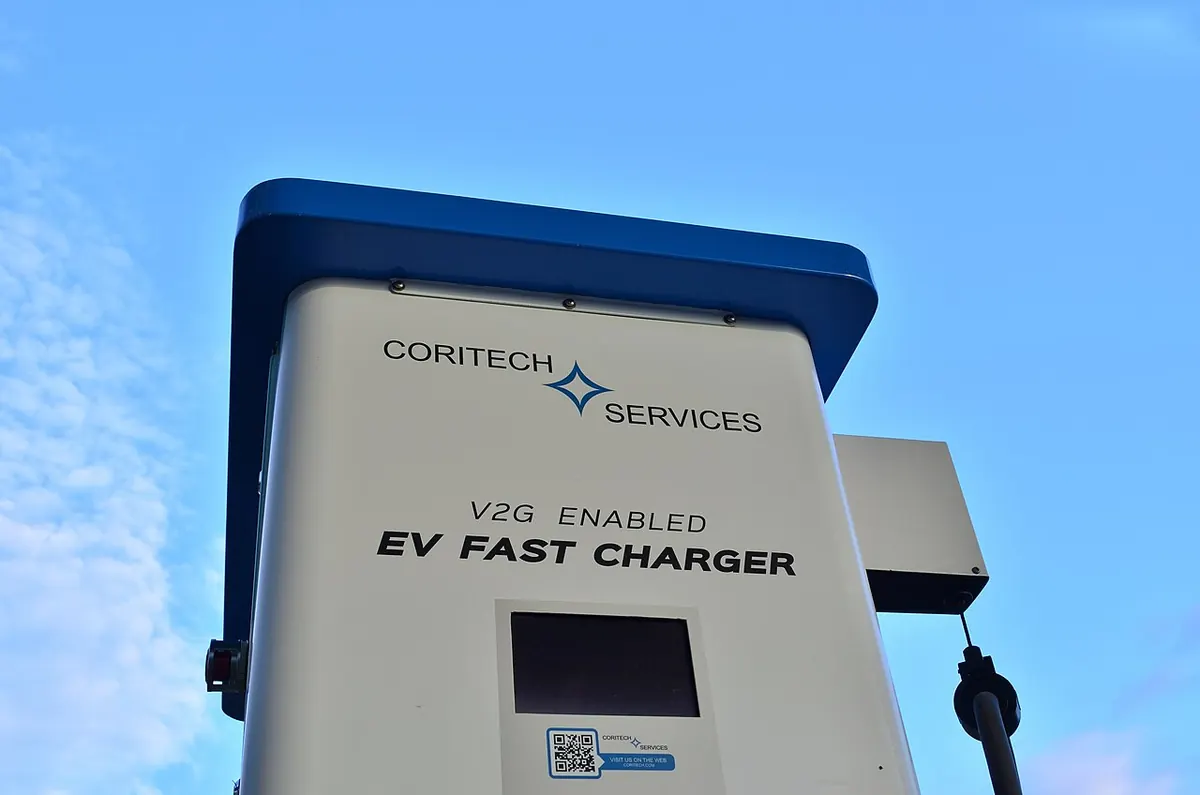
Bidirectional fast charger with V2G
In the photo: Bidirectional fast charger with V2GPhoto: Raysonho @ Open Grid Scheduler / Scalable Grid Engine · CC0 · Wikimedia Commons

V2H is when an electric car powers the home; V2G is when it sends energy to the grid. A bidirectional charging station can not only charge the car but also draw energy from it: the battery on wheels becomes a home backup for several days. The car is charged when energy is cheaper, and in the evening peak hours the home runs on it.

How it works

The car’s battery stores direct current, while the home runs on alternating current. An ordinary charging station pushes energy one way — from the grid into the car. A bidirectional system has an inverter — in the station or in the car itself — that can also do the reverse: it takes direct current from the battery and supplies the home with alternating current at the same voltage and frequency as the grid. The car and the station talk constantly over the cable: how much energy can be taken and when to stop.

When the power goes out in the neighborhood, an automatic transfer switch disconnects the home from the outside grid so the car’s energy does not flow into the lines where electricians may be working. The home switches over to the car: the fridge, lights, pump and boiler keep running. When the grid comes back, the switch reconnects the home, and the station starts charging the battery again. How long the car lasts depends on the load: the fridge and lights use little, an electric stove and air conditioner use a lot.

In the app you set a minimum charge level — how much to keep for the morning drive — and the station will not discharge the battery below it. Beyond that it works with the tariff: it charges the car at night or by day from solar panels, and in the evening, when energy costs more, sends it to the home. In V2G mode the grid company manages the same thing: many cars together act as a distributed power plant at peak hours.

Where it already works

  • China, Hubei: cars fed 376 MWh into the grid over 21,000 discharges (August 2025 — March 2026).
  • Private homes with an electric car: an energy reserve in case of outages.
  • Homes with solar panels: by day energy builds up in the car, in the evening it goes to the home.
  • Grid companies: cars smooth out the evening demand peak.

What to consider

  • Not every car can give energy back: check that both the car model and the station are V2H-capable.
  • Check the battery warranty terms: the manufacturer may count extra discharge cycles separately.
  • Connecting to the home is an electrician’s job: you need a switch that cuts the home off from the grid during an outage.
  • Selling energy to the grid (V2G) requires a contract with the grid company — at home it is simpler to start with V2H.
A joke on the topic

The power is out in the whole neighborhood, but our lights are on. The neighbors think we have a generator. It is just the car in the garage, pretending this is no effort at all.

The car used to only take from the home: money, keys and the last sandwich for the road. Now at least it gives something back — electricity in the evenings.

“Can I take the car to the store?” “Sure, but then no dinner: right now it’s working as the stove.”

Nearby on the radar

Full radar
E-01 · EnergyLive

Solar and battery for the home

Rooftop panels plus an LFP battery: lights and air conditioning even when the grid is down.

Vietnam: 5 kW — 44–48 million VNDgrid-tied plant without a battery, installer price 2026; with a battery — more
TRL 9
RU can be brought inVN can be brought in
How it works

By day the panels power the home and charge the battery, and a hybrid inverter decides where to draw energy from. In the evening the home runs on the battery, and the surplus goes to the grid — where that is allowed and paid for.

Fact. Chinese TOPCon panels cost about $0.11 per watt ex-factory — cheaper than ever.

Russia. The best fit: the south, dachas without a reliable grid, and backup in case of outages.

Vietnam. Since 26 Jun 2026 (Decree 243), rooftop surplus can be sold — up to 50% of output, including from a battery.

Sources: Decree 243/2026 · TOPCon prices, Jul 2026 · Vietnam installer prices

All about the technology: photos, video, details
E-02 · EnergyLive

Industrial battery storage (BESS)

Battery containers for factories, hotels and grids: they shave peaks, hold a reserve and store cheap energy.

Per projectdepends on capacity and use case
TRL 9
RU can be brought inVN can be brought in
How it works

The system charges at night or from solar and releases energy at peak hours, when it costs more — or during an outage. Software that tracks the tariff and the load runs it all.

Fact. In 2025, 112 GW of storage was deployed worldwide (+48%); 54% of it in China.

Vietnam. Vietnam’s power development plan: 10–16.3 GW of storage by 2030, against less than 100 MW at the start of 2025.

Sources: BNEF via ESS News · PDP8 (KPMG)

All about the technology: photos, video, details
E-03 · EnergyPilots

Sodium-ion batteries

Batteries made with sodium instead of lithium: cheaper raw materials and almost no fear of frost.

So far in cars and storage systemsfew retail modules
TRL 8
RU with caveatsVN with caveats
How it works

Sodium comes from ordinary salt, and there is thousands of times more of it than lithium. CATL Naxtra holds 175 Wh per kg and keeps over 90% of its capacity at −40 °C — for a Russian winter, that is the deciding argument.

Fact. The first production car on sodium — Changan Nevo A06 (February 2026).

Source: CnEVPost, 05.02.2026

All about the technology: photos, video, details
Have a task? Build a request

Two minutes — country, task, budget and timing. That is enough to propose a solution.